
27+ Best Interview Tips For Retail Jobs With Example Questions Managers Love
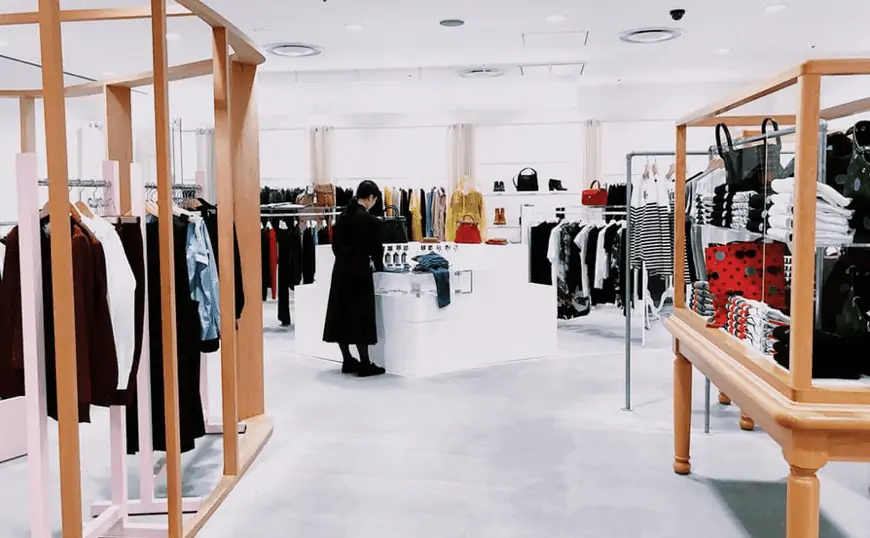
Interviewing for a job is a make-or-break moment. When you consider that you are literally being judged, there’s no wonder many of us get stressed out leading up to an interview. When you’re interviewing for retail jobs, keep in mind that the interviewer is looking for a professional, yet friendly person, as customer service is essential in retail.
Read the following interview tips for retail jobs to get clear on how you can put your best foot forward in your job application, and greatly enhance your chance of success.
These 27 interview tips cover everything from how to answer specific questions, to how to present yourself and other unique tips you might not have thought of.
27 Interview Tips For Retail Job Interviews!

How to present yourself: Interview tips for retail jobs
First impressions are very important. When you work in retail, you’re always giving out an impression of how you interact with customers. The interviewer will be looking at how you present yourself in the interview to get a sense of how you would present yourself in the job.
Tip 1. Wear appropriate clothes. Clean-cut, professional attire that doesn’t show a lot of skin. You won’t need a suit for a retail job, but you will need to dress more professionally than you might expect to dress if you were working there, just to show that you are taking the role seriously. (If relevant to the job you’re going for, like a fashion store, wearing their brand would be a bonus).
Tip 2. Along with how you dress, how you present yourself in your makeup, hair, piercings, and tattoos is important. Cover tattoos, take out piercings (unless simple earrings), and make sure your hair is neat. Again, depending on the job you’re going for, you can potentially get away with more jewelry (if it’s a retail jewelry store, for example).
Tip 3. Presenting yourself is also about how you walk into the interview. Stand tall, have relaxed and open body language (not crossing your arms), and of course, smile.
Tip 4. Following from above, smiling during the whole interview will present your most friendly and approachable side to the interviewer – something definitely needed for a retail job.
Tip 5. You are also presenting yourself in how you speak. Your tone of voice and the way you speak is just as important as the words that you use. Speak slowly, yet confidently, with direct language, being to-the-point, rather than speaking too much.
Tip 6. To develop a more comfortable connection with the interviewer, also use your body gestures to your advantage. When you ‘mirror’ the gestures they use (like how they are sitting), in a way that is subtle (not creepily copying them!) you will be more likely to be seen as a likable person.
Tip 7. Present yourself also as someone who is valuable for the company to hire. Rather than being so ‘gracious’ to the point where it seems like you are trying too hard (which comes across as desperate), go into the interview knowing that they would be lucky to have you. Make sure this doesn’t turn to arrogance, however. Keep it balanced.
Example answers for specific questions: Interview tips for retail jobs

You’re going to be asked a lot of different questions, and for each company and role, the questions will differ. Though you can expect some common questions that are standard for retail interviews. Below are some of these commonly asked questions, and examples of answers you could give.
8. Question: Why are you applying to work here?
Answer: “I’d love to work at [company name] because it has always been a company that I have held in high regard for your products and for the way that the staff has always greeted me. That’s made me feel like this is the kind of team I’d like to be a part of.
I believe in surrounding yourself in the right environment and around the right kinds of people to be able to work effectively and from an inspired place, and I feel I could do this here at [company name].”
9. Question: Where do you see your career in 5 years’ time?
Answer:” I definitely see myself advancing in retail to a point where I am able to reach supervisor and manager positions, and potentially higher roles. I am ambitious and am really looking for a company that I can stay with for the long-term.”
10. Question: What do you think makes good customer service?
Answer: “I believe that customer service is all about treating people as people, not as numbers. Being approachable and friendly is important, but beyond that, greeting customers with genuine positivity is always felt far more than the regular smile that feels a little more like they’re smiling because they have to. I am a social and outgoing person naturally, so I feel that allows me to interact with customers in a much more natural way.”
11. Question: What is your availability?
Answer: (This would be tailored to your specific context)
“I am currently available any day except Thursday, where I have a sports activity in the afternoons. I’m willing to work as much as needed, as I intend to make this a full-time role. Weekends are fine for me, and I am flexible to be on call to come in short notice as well.”
12. Question: If a customer were to become angry and complain, how would you handle this situation?
Answer: “I would first listen and refrain from defending and offering excuses as to why the situation occurred, allowing them to feel heard, whilst also keeping neutral. I would always remember that it’s not personal – they are simply not happy with something – and that all I can do is offer solutions.
If the solution was out of my responsibility, I’d calmly let them know that we would like to help them and that I will get my supervisor or manager (either in person or over the phone) to help with the situation. “
13. Question: How do you handle busy environments?
Answer: “I like working in fast-paced environments. I’ve always liked the dynamic, fast energy that is required for a busy role, and I feel like I am more efficient and thrive in those situations when we have many customers and juggling many tasks.”
14. Question: How do you handle a very quiet day with little customers?
Answer: “I feel like that is the perfect time to get on top of tasks that can be done like deep cleaning to store, the register area, or looking over any admin work that I would also help with. I’m a patient person and don’t get bored very easily, so I can handle quiet days just as well as busy days.”
15. Question: Do you work well within a team?
Answer: “I would say that I do, as I am a social person and I have strong communication skills. I feel that communication is one of the most important elements of teamwork, and if we are all clear on our tasks, we can work in a smooth way. Not only that, problem-solving is far more effective when there are other people to bounce ideas off of.”
Example questions to ask: Interview tips for retail jobs

Not only will you be answering questions asked of you in your interview, but you’ll also get a chance to ask your own. If you haven’t prepared for this, you could be caught off guard with nothing to say, which won’t look so good to the interviewer.
Below are some examples of retail interview questions you can ask that reveal your interest and thoughtfulness about the role.
16. Why did you start working at [company] and how long have you been with them?
17. What are your busiest days and the busiest times of the store?
18. What is your best-selling item, and why do you think this is?
19. What did you personally wish you knew when you first began in retail?
20. What kind of growth are you expecting from this company over the next 3 years?
21. Are there opportunities to grow and advance within the company?
22. When do you feel you will be complete with interviews and close to a decision about this role?
Follow up after the meeting: Interview tips for retail jobs
23. Though you might want to immediately check in after the interview to see if you got the job, resist doing this. Give it at least 24 hours before you contact the interviewer.
24. When you first contact your interviewer to follow up, rather than ask about their decision, simply say thank you and make the email an expression of gratitude for their time.
25. Opt for an email to follow up, rather than calling. Again, as it is first an expression of gratitude, rather than to ask if you got the job, you don’t need to call. Most likely the interviewer has a lot on their plate, and calling may seem a little intrusive of their time if you did just meet in person not so long ago.
26. In your follow-up email, you can also offer to provide additional references or information if they need it during the decision-making process. This open offer shows that you are still very much interested, without sounding like you need anything more from them in hounding them for answers.
27. If you get no response after your first follow-up email, wait 5-7 days before you write a second follow-up email. This ensures you don’t come off too strong and needy, whilst also staying in their awareness and once again letting them know you are still interested in the role.
To get more prepared for your retail interview, check out my post on how you handled a stressful situation at work.
References
- https://www.thebalancecareers.com/retail-customer-service-interview-2061220
- https://blog.hubspot.com/marketing/retail-interview-questions
- https://www.indeed.com/career-advice/interviewing/retail-interview-questions
