
2024‘s Top 11 Best Online Digital Marketing Courses [Free + Paid]
![Best Online Digital Marketing Courses 1 [year]'s Top 11 Best Online Digital Marketing Courses [Free + Paid]](https://skillscouter.com/wp-content/uploads/2022/02/Best-Online-Digital-Marketing-Courses-1.webp)
Excellent digital marketing professionals master a range of skills from search engine optimization (SEO), to pay-per-click (PPC) advertising, to expert content marketing and social media strategy.
Are you eager to apply marketing analytics to help businesses navigate the digital world and drive e-commerce through metrics-based campaigns?
Business owners strive to reach their audience through various marketing channels, ranging from creative copywriting to strategic Google Ads to partnering with relevant influencers. To compete, every company’s marketing plan needs to include a savvy internet marketing strategy. This creates a real demand for talented digital marketing specialists.
I have curated a thorough list of digital marketing training courses. Below you will see a range of opportunities. Some of which are free courses, others are professional certificate programs.
Commitment to these courses could be the first step towards a new digital media marketing career.
Let’s begin.
Top 11 Best Online Digital Marketing Courses & Classes 2024
1. Learning Path: Digital Marketing (LinkedIn Learning)
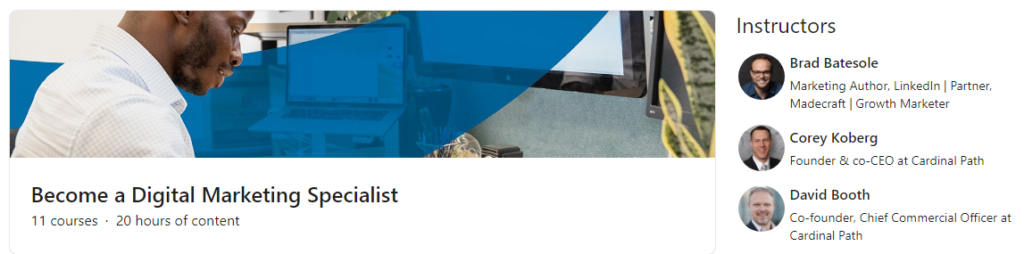
First on our list is a comprehensive set of courses from LinkedIn Learning which features 11 modules taught by several digital media experts. Instead of having to research which SEO course to take and then the best AD Words course to follow, you can commit to this one “learning path.”
Since the digital world evolves quickly, you will see that these lessons and the course materials are regularly brought up to date.
The curriculum includes: training with Google Analytics 4, dive into SEO (landing page design, keyword strategy, link building), hands-on work with Google Ads, content and social media marketing (including deep dives on Facebook and Instagram), developing newsletters and email campaigns, and wraps up with graphic design to teach the editing images and developing logos using Photoshop, Illustrator and InDesign.
Students can also join a digital marketing community page to trade ideas with others.
This learning path combined with a community allows you the convenience to work at your own pace coupled with elements of a college curriculum to hold you accountable and motivated to learn, connect and earn a certificate of completion.
- One-stop shopping for comprehensive learning
- Taught by multiple industry experts
- Chapter quizzes to keep you on track
- Certificate of Completion – display on CV
2. Digital marketing crash course for online marketing: Social media, email, SEO, advertising and more (Skillshare)
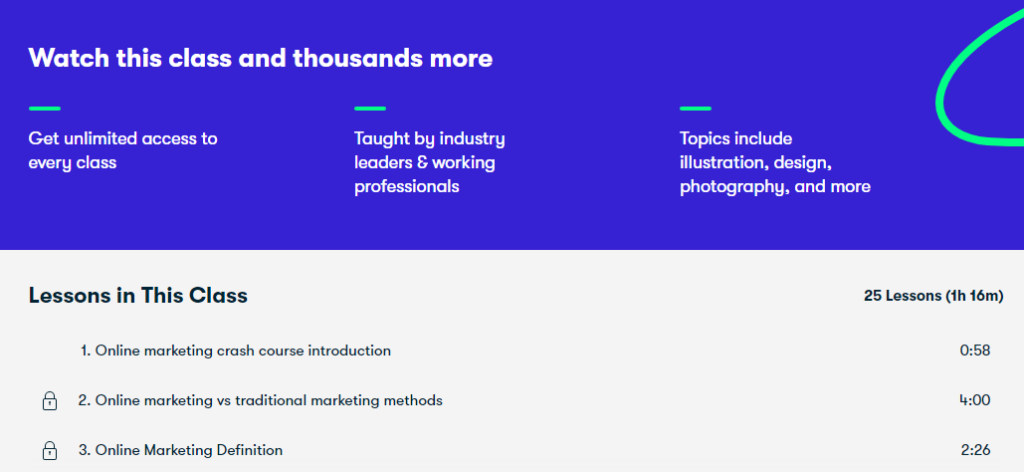
If you’re looking for a crash course in online marketing training, this online course is a great pick! After completing this beginner-level course, you will be able to effectively create your own digital marketing campaign.
Your instructor for this online course is Henk Dezzel, an online marketer with years of experience and consistently great reviews so you know he delivers quality.
Course modules in this online digital marketing course include online marketing vs traditional marketing, value chain, brand marketing, Google analytics, affiliate marketing, and Facebook ads. Lasting 1 ¼ hours of on-demand video, there are also bonus extras of class projects, class discussions, and downloadable resources.
You will find this course on SkillShare, the online continuing education platform for instruction in the arts, science, technology, healthcare, and business that offers new users a free trial. All in all, this is a great beginner’s course on the fundamentals of digital marketing!
- Beginner level
- 1 ¼ hours on-demand video
- Taught by highly rated instructor
- Downloadable resources
- Class discussions
- Class projects
3. Become a Digital Marketing Specialist (LinkedIn Learning)
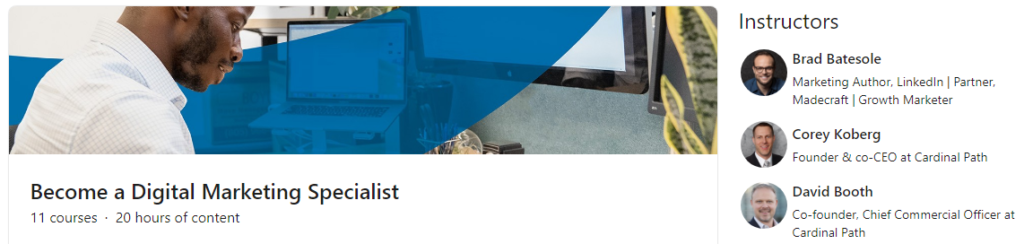
If you’re keen to deepen your digital marketing knowledge, this beginner-level learning pathway pulls together a series of courses for a complete digital marketing education!
Instructors for these courses are carefully-selected experts from the fields of marketing, business administration, sales, and internet technology. Each of the instructors is certified by LinkedIn Learning to provide online education on these subjects.
Spanning over 25 hours of on-demand video, this online course features modules on Google analytics, SEO, content marketing, social media, email and newsletters, ads, and graphic design. Each of these online courses includes valuable extras such as downloadable resources, class discussions, and a certificate of completion for the entire learning path.
This online course is hosted on LinkedIn Learning, part of the LinkedIn online platform for business and professional networking, training, and job searching. If you’re new to LinkedIn, make sure you sign up for a free trial! Overall, this is a highly comprehensive digital marketing course that will teach you all you need to know!
- Beginner level
- 25 ¼ hours on-demand video
- Taught by experts in digital marketing
- Part of an entire learning path
- Downloadable resources
- Certificate of completion
4. The Complete Digital Marketing Course – 12 Courses in 1 (Udemy)
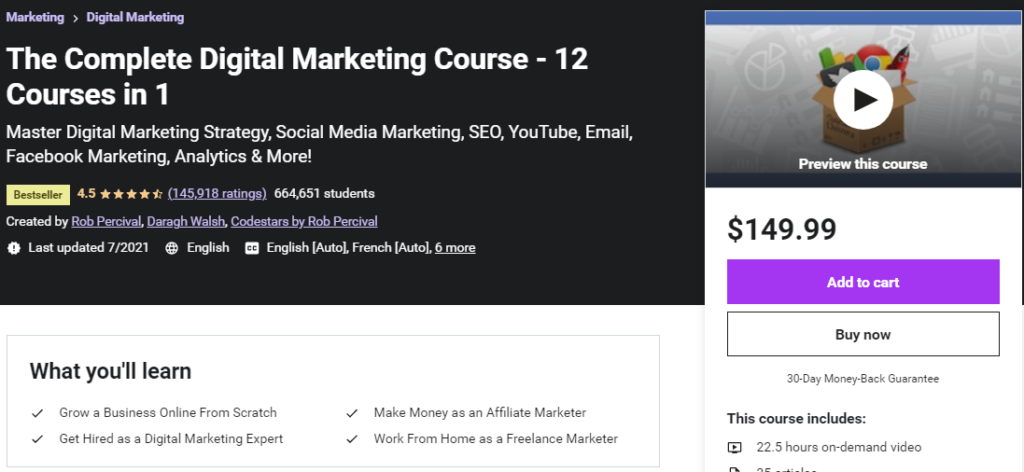
Over 400,000 students have taken this interactive online course which will guide you from scratch to being able to do expert level online and digital marketing. It’s beginner-level instruction and is actually 12 online courses in 1.
Your instructors for this online course are specially picked professionals in their fields and fully certified to teach these subjects online, so you are getting a wealth of knowledge and experience by taking this course.
Over 23 hours of on-demand video, this course features lessons on market research, WordPress, Google Adwords, social media, YouTube, and Google Analytics. Also included are many downloadable resources for each class, class projects, exams, and a certificate of completion.
This course is found on Udemy which hosts thousands of online courses for adult professional continuing education and certifications. Enroll right away to take advantage of this fantastic course if you’re new to digital marketing!
- Beginner level
- 23 hours on-demand video
- Professional business operators as instructors
- Exams
- Downloadable resources
- Certificate of completion
5. Digital Marketing Specialist (SimpliLearn)
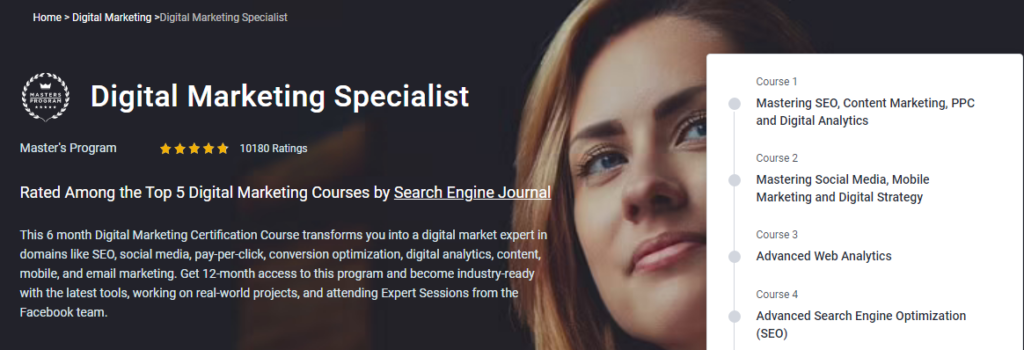
In partnership with Harvard Business Publishing Education, this online course will provide advanced-level tools that will make you fully competent and completely equipped to handle any tasks involved in digital marketing!
This online course is taught by a team of diverse professors and professionals from various marketing and business administration backgrounds, so you will receive the benefit of their broad experience.
Throughout a year-long study program with access to over 75 different online courses to complete an education in digital marketing, some courses cover SEO, content marketing, social media, web analytics, and mobile marketing. Extras include marketing tools, downloadable resources, certification alignment, and a masters certificate as an Online Marketing Certified Professional.
Students enrolled in SimpliLearn courses have access to top-level instructors and receive lots of valuable bonus materials and programs, so you won’t want to miss this great online digital marketing course to get started in the industry!
- Beginner through advanced level
- A year-long course of study
- Taught by business professionals and professors
- OMCP certification
- Marketing tools provided
- Downloadable resources
6. Digital Marketing Specialization (Coursera)

Part of the Master of Business Administration (iMBA) degree program from the University of Illinois, this specialization covers the new digital and online marketing environment and teaches you from beginner level through to advanced levels!
Since the University of Illinois MBA program is a top-rated program with expert instructors, you will be taught in this course by true leaders in their field who provide a superior level of business education.
This online course will take about 8 months to complete with class topics including marketing principles, strategies, analytics, and analog marketing, as well as providing hands-on demonstrations, downloadable resources, and class discussions.
You can find this course on Coursera, a platform that condenses degree-level courses from various universities and colleges into online courses you can complete in just a few weeks or months, allowing you to continue working as you enhance your skills and knowledge! All in all, a fantastic course to boost your digital marketing skills.
Check out our guide on getting 1000’s Of Coursera Courses For Free if you are interested in more Coursera opportunities!
- Beginner through advanced level
- An 8-month course of study
- Taught by experts from the University of Illinois
- Hands-on demonstrations
- Downloadable resources
- Certificate of completion
7. Become a Digital Marketer (Udacity)
Learn how to create engaging content and advertise through social media and email with this beginner-level course that has a lot of flexibility built in for self-paced learning!
You will be taught in this online course by a team of successful online marketers, business consultants, and app developers from the USA and Europe.
Plenty of value is jam-packed into this online course, such as personalized feedback, technical mentor support, a personal business coach, and real-world projects to work on. Throughout 3 months of on-demand video, this course comprises modules covering marketing fundamentals, content strategy, social media, email ads, and display advertising.
You can take this course on Udacity, providing expert-level instruction for many types of business administration and marketing. Overall, this is one course you’ll want to enroll in to deepen your understanding of digital marketing!
- Beginner level
- 3 months of on-demand video and other access
- Taught by experts in digital marketing
- Personal mentors
- Real-world exercises
- Certificate of completion
8. Build Your Digital Marketing Agency | Run Your Social Media Marketing Business (Full Course) (Skillshare)
If your goal is to guide other businesses as a digital marketing consultant, this online course suitable for all levels will teach you what you need to know to do so effectively!
Robin and Jesper, digital marketing experts, are your instructors for this highly rated online course, sharing their knowledge, skills, and wide experience with you.
Within the course modules of this 6 ½ hour on-demand video class is instruction covering niche vs general advertising, creating a legal entity, taxes, banking, setting prices, getting clients, and writing contracts. Students also receive downloadable resources and class projects with discussion.
You will find this online course on SkillShare along with bonus extras included with all courses as mentioned above, plus you get the benefit of a free trial if you’re a new user. You won’t want to miss this excellent digital marketing course, no matter what level you’re currently at!
- All levels
- 6 ½ hours on-demand video
- Taught by marketing experts
- Downloadable resources
- Class projects
- Class discussions
9. Digital Marketing Masterclass – 23 Courses in 1 (Udemy)
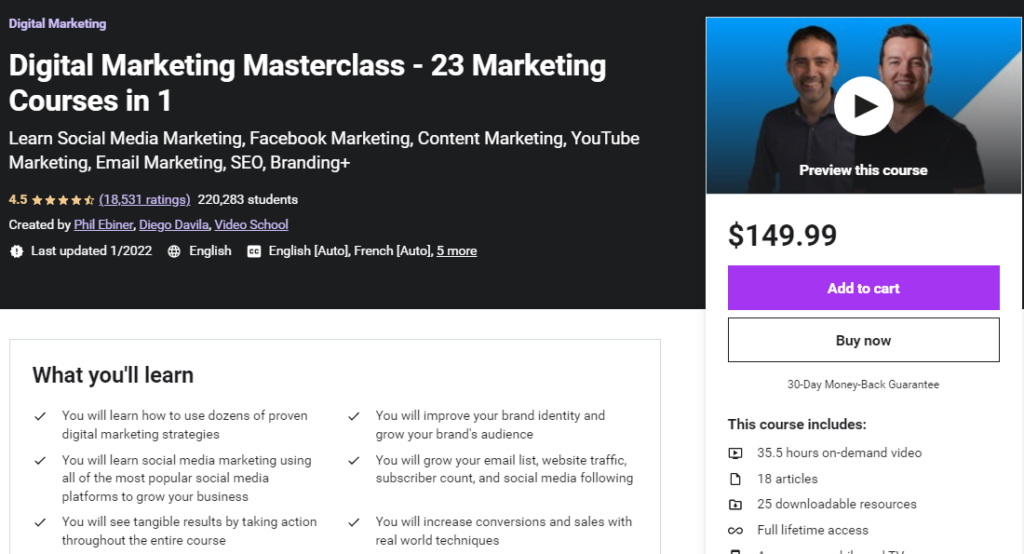
If you’re interested in a complete digital marketing learning path with 23 courses in 1 package of online instruction, this beginner’s class will start you on your journey to growing a business through effective digital marketing strategies and techniques!
In this online course, you will be taught by a team of very highly rated instructors with 4 ½ million satisfied students among them so you know you are getting quality teaching.
Course modules in this online course include identifying a target audience, brand identity, websites, email marketing, YouTube, social media, analytics, and live streaming. Students also receive downloadable resources, class projects, class discussions, and a certificate of completion during the 32 ½ hours of on-demand video.
Udemy, the host for this online course, provides students with a great educational experience by pairing expert trainers with willing students. Overall, this is a highly comprehensive course that will help you develop all of the necessary digital marketing skills to build your business!
- Beginner level
- 32 ½ hours on-demand video
- Expert, highly rated instructors
- Downloadable resources
- Class projects
- Certificate of completion
10. Free Online Digital Marketing Courses and Exams (Semrush)
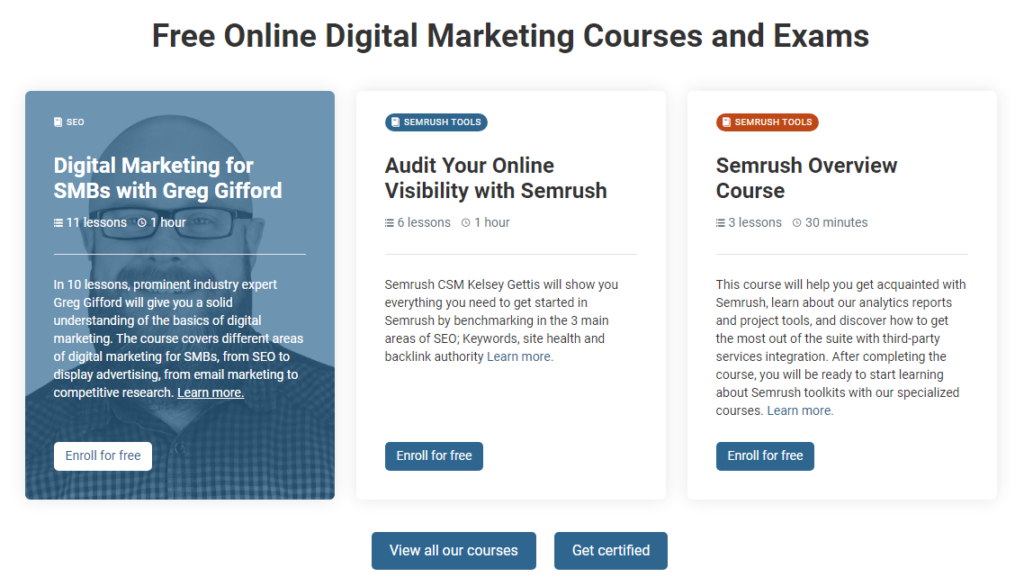
Next up on my list is a series of courses covering all aspects of digital marketing, ranging from beginner to advanced level!
As for your instructors for this online course, all are experts in their respective fields and certified to teach online courses, so you are in great hands.
In this online digital marketing course, modules include SEO fundamentals, content marketing strategy, and certification courses throughout the easily accessible on-demand video that lets students take their learning at their own pace. This course also features downloadable resources and exams.
You can find this online course hosted on Semrush, a leading digital marketing provider so they can teach you about the things they have excelled in for years. No matter what level your digital marketing skills are at, you’ll want to dive deeper with this great online course!
- All Levels
- Self-paced study including on-demand video
- Taught by certified experts
- Downloadable resources
- Exams
- Certifications available
11. Marketing Tools: Digital Marketing (LinkedIn Learning)
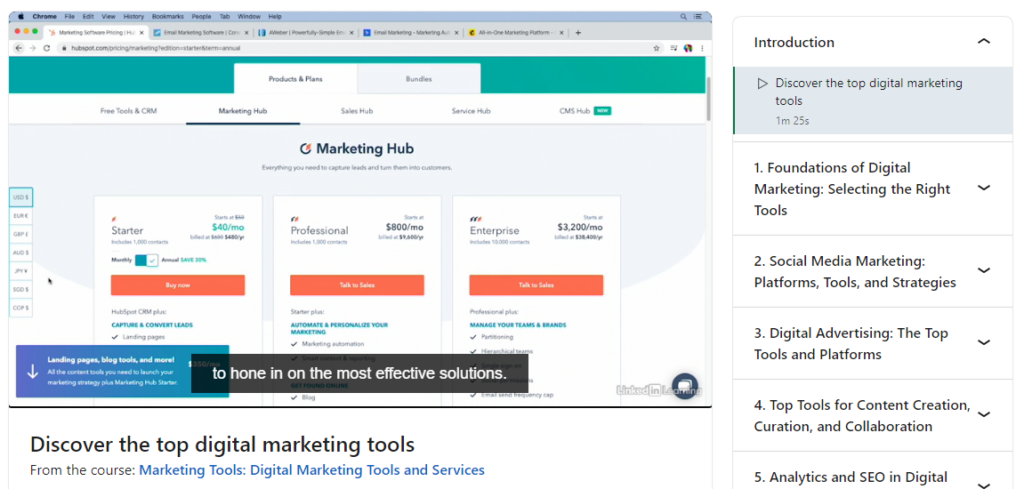
If you’re keen to learn crucial marketing tools for digital marketing, this beginner-level class will provide top-level instruction for marketing in the online business world!
Your instructor for this online course is author Anson Alexander, an expert in SEO, blogging, and all things digital and online.
Course modules throughout the 1 ½ hours of the on-demand video include marketing tools, promotion, media automation, display automation, and content creation. Extras include downloadable resources, class projects, and class discussions.
LinkedIn Learning is the host for this online course and includes many extras such as a certificate of completion, plus a free trial if you’re a new LinkedIn user. All in all, this is an excellent course for those new to digital marketing!
- Beginner level
- 1 ½ hours on-demand video
- Taught by SEO expert
- Class projects
- Downloadable resources
- Certificate of completion
