
Top 11+ FREE Best Online Adobe Premiere Courses, Certifications + Training
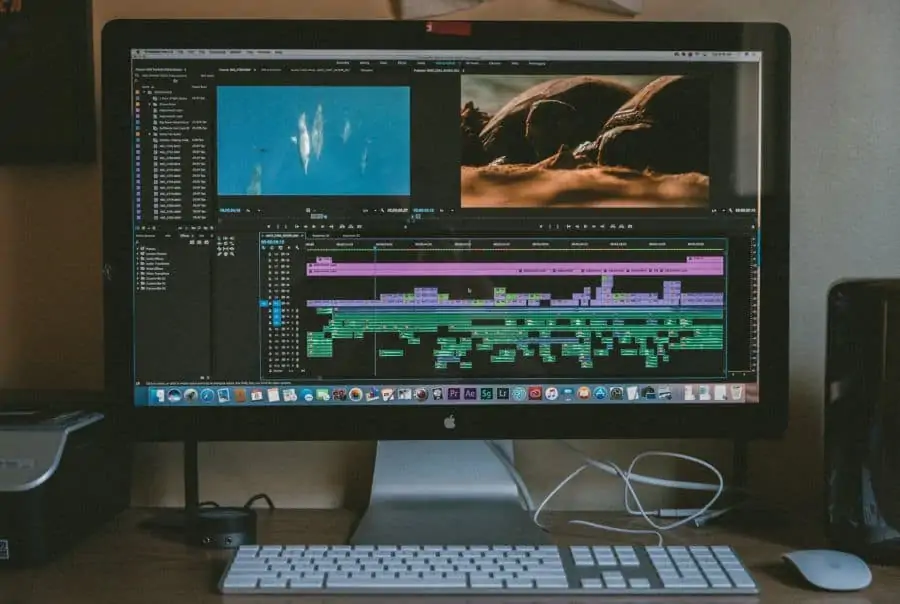
If you are looking for the best online Adobe Premiere courses, you’re in the right place!
In this guide, I have rounded up some of the top online classes that anyone can take to learn the art of video editing on the widely loved Adobe Premiere platform.
All of these classes will enable you to start editing like a pro, whether that be for YouTube vlogs, films, home videos, commercial videos, and the list goes on. Let’s begin!
Top 11 Best Online Adobe Premiere Courses & Training 2024!
1. Video Editing with Adobe Premiere Pro for Beginners (Skillshare)
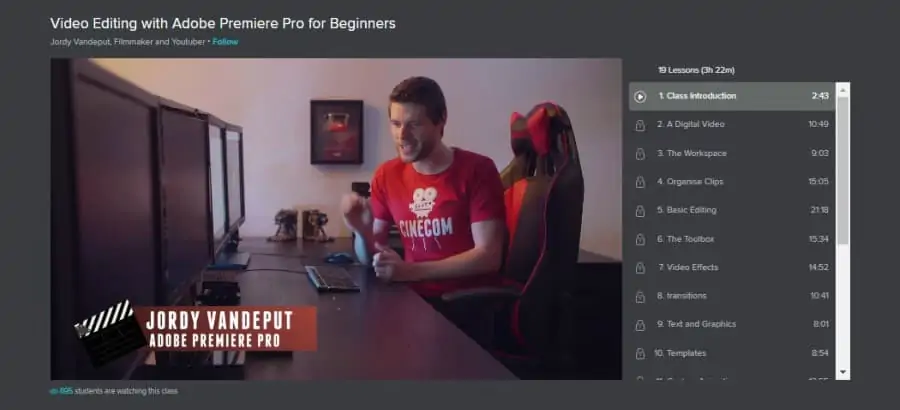
Up first on my list is a fantastic course that is hosted on Skillshare that is great for beginners!
In this course, you will become acquainted with all of the most fundamental features of Adobe Premiere plus some really helpful hints concerning the deeper features and tools. As an added bonus, this course is on its 5th iteration which gets updated every year.
All up the course is about 3 ½ hours of on-demand video, consisting of 19 lessons you can complete at your own pace. A class project is also part of the instruction and there are quizzes you can take to make sure you’re getting the most out of the instruction provided. There are also downloadable resources to practice editing!
Taught by Jordy Vandeput, a professional filmmaker and respected videography instructor. You can join an online community of former students (over 29,000!) to further enhance your Adobe Premiere editing skills.
Some of what’s covered in the 19 beginner level lessons are organization of files, basic editing, adding audio as well as mixing existing sound, animation, special effects, using templates, and exporting usable files.
Overall, this is an outstanding course for someone who want’s to learn Adobe Premiere in an easy to learn manner from one of the best! There’s also a 1-month FREE trial to take advantage of ????.
- Beginner level
- 3 ½ hours
- Taught by an established pro
- Self-paced
- Online community of graduates for further collaboration
- Class project from online resources
Activate FREE Skillshare Trial
2. Complete Adobe Premiere Pro Video Editing Course: Be A Pro! (Skill Success)
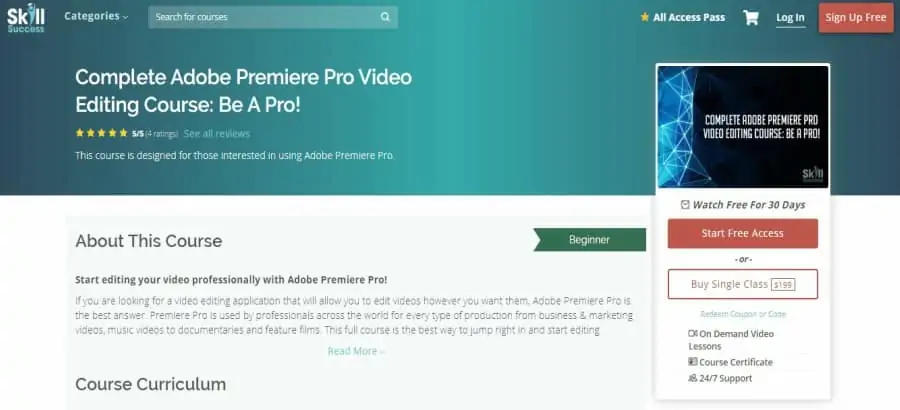
A complete tutorial, this takes Premiere users from beginner to intermediate. Taught by a professional filmmaker with degrees in film and editing, the instruction will give you the skills and knowledge necessary to make great videos. This 5-star rated course has been taken by nearly 4,000 students.
One of the best online Adobe Premiere courses available, this class will teach you all that you need to know to get started and will show you how to continue building on those skills. Besides the basics, you will learn chroma key techniques, audio mixing, special effects, and how to upload usable finished videos.
Skill Success is an emerging online learning platform that focuses on creative content like Adobe Premiere. And with low monthly subscriptions to access their full catalog and an easy cancellation policy, its very low risk to give this course a shot.
- Beginner to intermediate level
- Taught by a professional filmmaker
- Lifetime access
- Certificate of completion
- 24/7 support
- Includes bonus lessons and materials
3. Adobe Premiere Pro CC – The Complete Course (Skillshare)
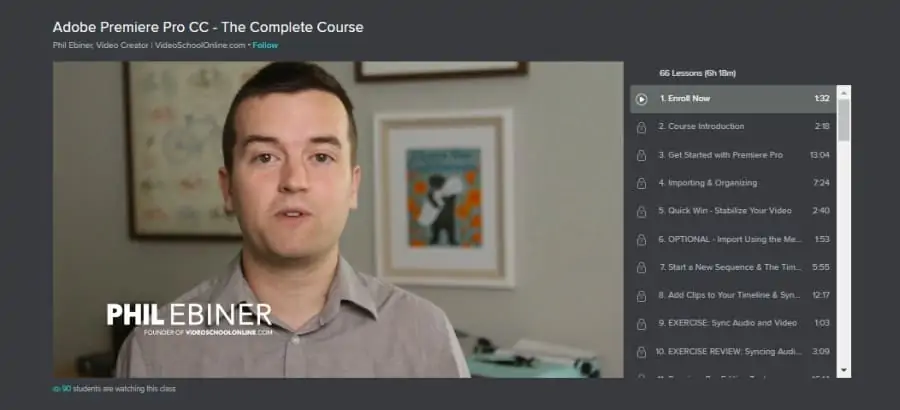
Next up on my list is another great beginner level class with a lot of practical instruction which includes 66 lessons and is a little over 6 hours. With much of the instruction, you learn by doing, using the provided downloadable files to put into practice what the instructor is teaching.
Your instructor for this course is Phil Ebiner, who holds a BFA in Film and Television Production and is a professional filmmaker, editor, and instructor for many different cinema, video, and photography techniques, processes, and programs. As of writing this, more than 4,500 people have benefitted from this course!
Some of the lessons included in this course are editing transitions, incorporating audio and soundtracks, adding visual effects, how to do green screen, and workflow efficiency instruction.
There are also supplemental files for audio and video provided in order to use the program’s tools while learning about them!
Being hosted on Skillshare, users can take this course and also the above one on their 1-month FREE trial that you can cancel anytime!
- Beginner level
- Professional videographer as an instructor
- 6 hours of on-demand video
- 66 different lessons
- Online community after completion
- Work on a class project
Activate FREE Skillshare Trial
4. Premiere Pro CC Video Editing for Beginners (Skillshare)
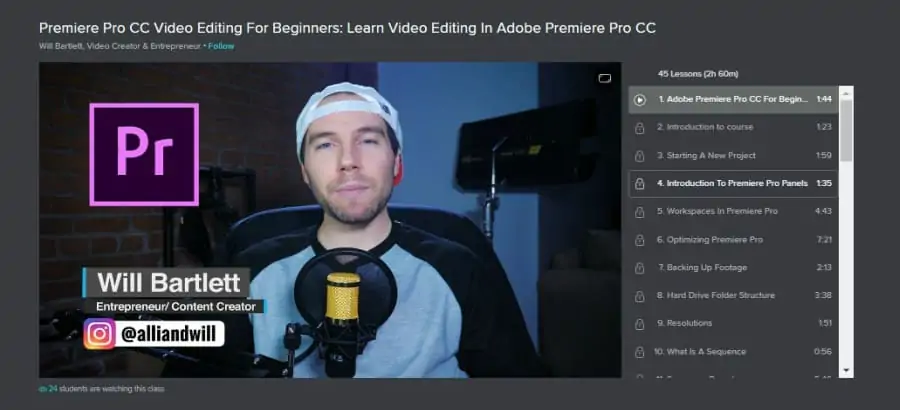
Moving on is another standout course for beginner/ intermediate Premiere CC users that walks you through how to install, open, and begin using Adobe Premiere. It then takes you to the tools you need to accomplish basic editing and how to progress beyond that level.
Overall, it’s a 3 hour class with downloadable music and video files you can use as you take in the information. In addition to those files, the course also provides several PDF files of things learned for you to keep on hand afterward. Also being hosted on Skillshare, users also get access to the iOS and Android App for mobile and offline viewing.
Will Bartlett is the teacher who is a professional cinematographer and editor with a long history of working as a content creator and editor. He also makes available some files to download and complete as you go through the course.
Some lessons included in this course are how to configure workspaces, working with sequences, track layers, and transitions. A comments area is included in course materials, giving you feedback to questions too.
All around a fantastic course!
- Beginner level
- Professional cinematographer as instructor
- 3 hours on-demand video
- Comments section for questions
- Downloadable files
- Students complete project film editing project
Activate FREE Skillshare Trial
5. Premiere Pro CC 2019 Essential Training: The Basics (LinkedIn Learning)
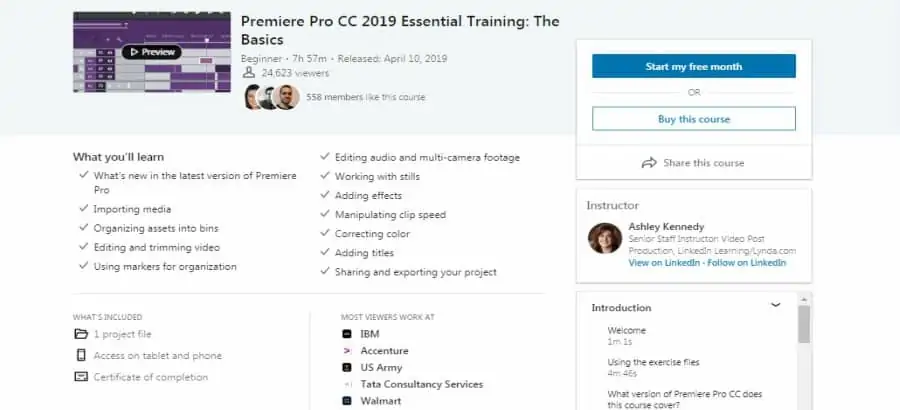
For those who truly want an in-depth course on the ins and outs of Adobe Premiere Pro CC, this might be the class for you!
Taught by instructor Ashley Kennedy, a professional videographer and a teacher at Columbia College Chicago, she leads you in this 8-hour long introductory look at Adobe Premiere Pro, making it one of the best online Adobe Premiere courses available.
Some of the topics discussed include importing your media into the program, organizing via markers, incorporating still images, manipulating clip speed, and editing multiple camera footage. Project files are also included, allowing you to put into practice what you’re studying.
Provided by LinkedIn Learning, over 23,000 students have taken this course with a certificate of completion provided to graduates. There’s also a 1-month FREE trial to take advantage of! You can also view my post on some of the top free LinkedIn Learning courses in 2024.
- Beginner level
- 8 hours on-demand video
- Professional instructor
- Includes project files
- Accessible on mobile devices
- Certificate of completion
6. Adobe Premiere Pro CC Video Editing: The Complete Guide (CreativeLive)
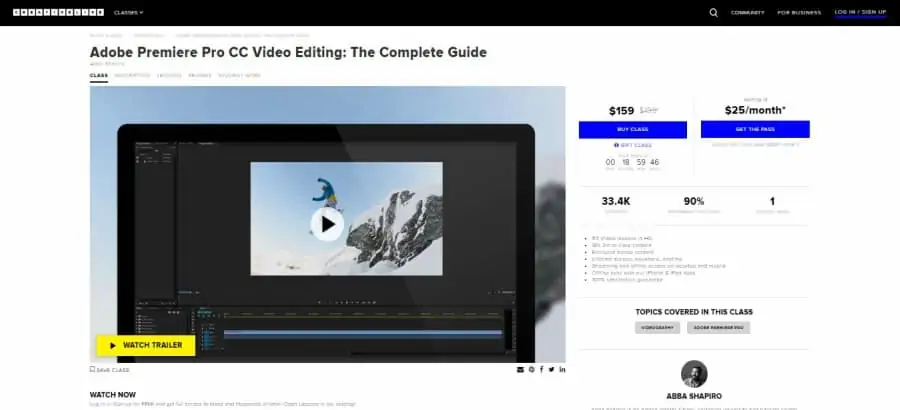
Up next is a course that specifically covers the Creative Cloud version of Adobe Premiere. This class is introductory level and leads up to an intermediate level of instruction which assumes you are already somewhat familiar with digital videography and editing, so it doesn’t spend too much time on the initial set up of the program.
Included in the lessons are making rough cuts and then refining those edits, transitioning with and without audio, speed changes, color corrections, making time-lapses, and other special tools.
Taught by Abba Shapiro, a certified Adobe instructor, he teaches others to become Adobe instructors themselves in addition to being a master trainer in various Adobe programs and other video-specific software. So students know they are getting top notch quality education.
All up, there are 18 hours of content separated into 65 lessons in this class, which makes it the longest on this list. Also by taking this class, you are able to join the FaceBook group of students and get live feedback on your work. Over 33,000 have taken this course and 90% of those students recommend it.
To learn more, you can check out my CreativeLive review here where I go into more detail about the provider.
- Beginner to intermediate level
- Taught by an Adobe master trainer
- 18 hours of content
- Lifetime access
- Social media group access
- Lots of extra material provided
7. Adobe Premiere Pro CC: Video Editing in Adobe Premiere Pro (Udemy)
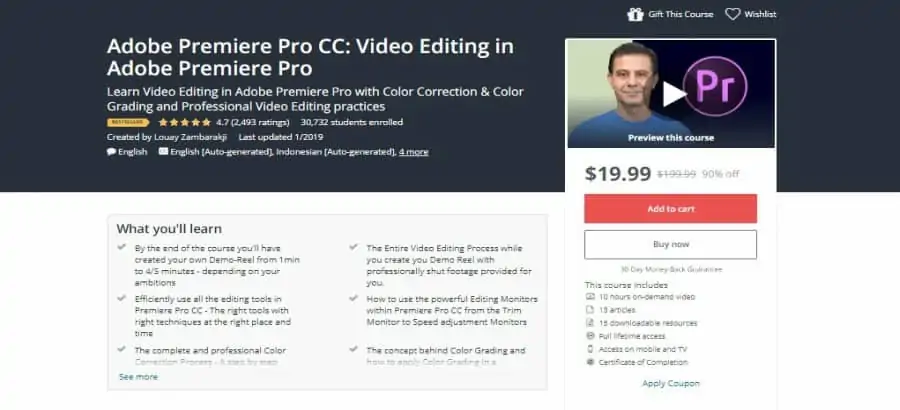
From the fundamentals of Adobe Premiere Pro to more advanced editing techniques, this 10-hour on-demand video course has it all.
Also included in this course are 13 articles, 15 downloadable resources, over 5 GB of source material, 230 videos and lifetime access to course materials. As an added bonus, there is also a certificate of completion provided at the end of the course.
Some of the things covered in the lessons are a complete step by step approach to the complete correction process, how to use the editing monitors, efficiency of the workflow, and color grading to create or enhance mood and style.
Louay Zambarakji is the instructor who is proficient in all aspects of modern digital video editing and is a professional videographer and editor. Overall, a great course!
- Beginner to intermediate level
- 10 hours of on-demand video instruction
- Professional editor as instructor
- 5 GB of extra material
- Certificate of completion
- 30,000+ students
8. Advanced Workflows For Serious Video Editors With Adobe Premiere Pro (Skill Success)
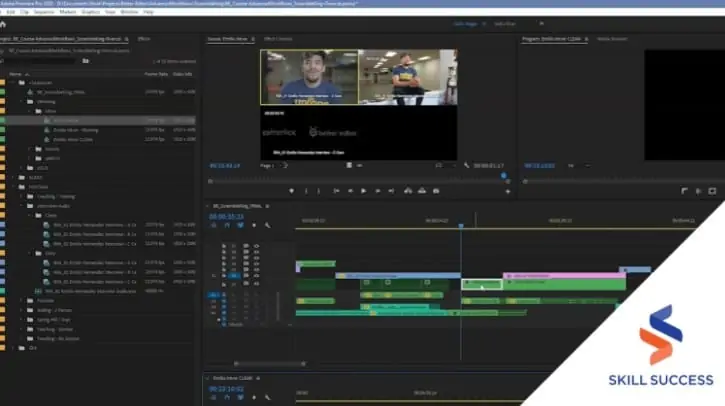
If you are specifically wanting to use editing programs to learn industry-standard video editing workflows used by agencies and studios, this is the course for you. You’ll hit a full suite of workflow concepts like mixed frame rate usage, using proxies and multicams, overcutting and offline/online workflow.
It is introductory to intermediate level and is targeted to those who are new to the world of video. In this class, you’ll learn how to fix less than perfect raw footage, add in a mix auxiliary audio files, ingest and transcode workflows, master organization and syncing strategies, and edit with scripts and transcripts. You’ll ultimately complete the project and learn the best practices in archiving.
Taught by a seasoned freelance video editor for film, tv and athletics, a certificate of completion is provided afterward. Lots of downloadable resources are provided for practice during and after class. To learn more, you can see my full Skill Success review here.
- Beginner to intermediate level
- Targeted to makers of corporate videos
- Certificate of completion
- Taught by professional videographers
- 24/7 support provided
- Lots of exercise files provided
9. Adobe Premiere Pro CC: Learn Video Editing in Premiere Pro (Udemy)
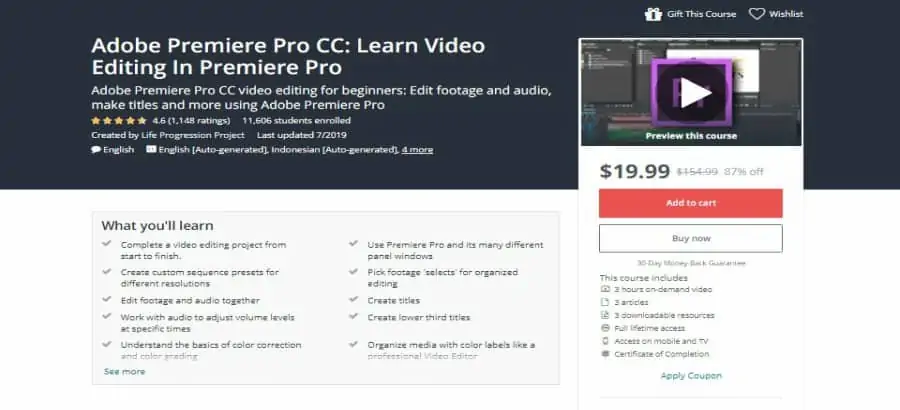
Will Bartlett, a professional video editor, teaches this 3-hour course which covers all the basics that a beginning user of Adobe Premiere would need to know in order to create and edit good videos.
It’s also one of the best online Adobe Premiere courses for those already familiar with the editing process but who are stepping up to Premiere from other programs. Include with the instruction is audio and video footage to download for practice sessions.
You will learn how to interpret and use color profiles, how to create presets to speed up your workflow, what the keyboard shortcuts are, and how to finalize your media output.
Full lifetime access, a certificate of completion, and various extra resources come with this course.
- Beginner level
- Professional instructor
- 3 hours on-demand video
- Certificate of completion
- Downloadable resources
- Lifetime access
10. Premiere Pro tutorials (Adobe)
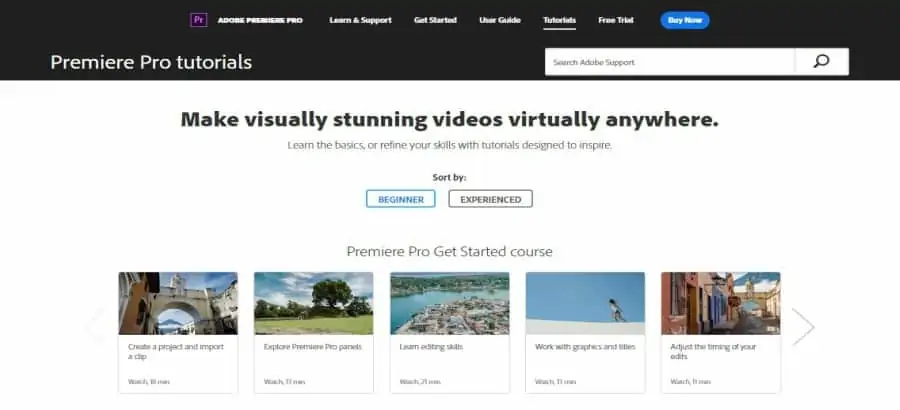
From the makers of the program, Adobe, comes a wide variety of beginner to advanced tutorials and other resources taught by Adobe instructors with message boards to allow you to collaborate with thousands of other Adobe program users.
There are multiple platforms the instruction is provided on, choose what style of teaching works best for you.
Learn about clips, storyboards, three-point edits, animation, audio mixing, and importing from other editing programs. Whatever you need, Adobe has either a tutorial or a help group for you.
If you are looking into other editing platforms, you can also see my guide on the best video editing online courses here.
- Beginner through very advanced levels
- Multiple platforms
- Various topics
- Adobe certified instructors
- Many extra resources
- Learn at your own pace
11. How to Color Correct in Adobe Premiere Pro for Beginners (CreativeLive)
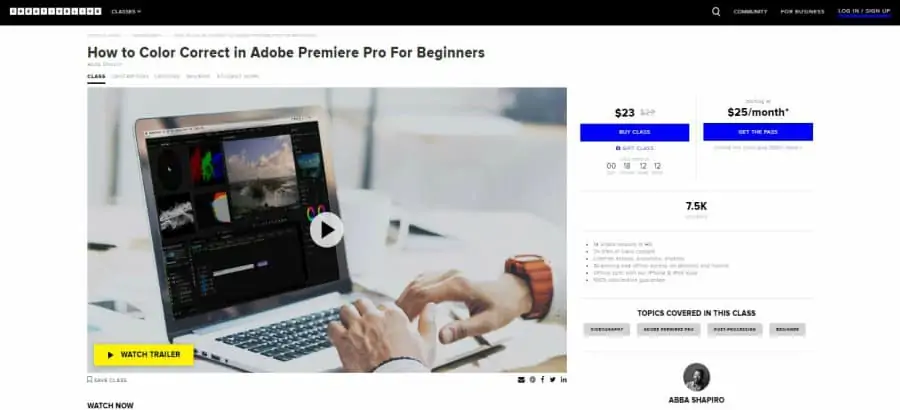
An advanced subject, taught in a way accessible for beginners, color correction is a vital skill for making your videos more watchable.
Led by Abba Shapiro, an Adobe certified instructor, you will learn the basics of color correction and several more advanced techniques including matching or adjusting multiple clips taken at different times, under different lighting conditions, and even from several different cameras.
14 lessons in 2 ½ hours of on-demand video, this course also teaches reading video scopes and how to use curves and the color wheels to fine-tune edits.
Lifetime access includes offline on mobile devices such as your phone or tablet.
- Beginner to intermediate level
- Taught by an Adobe certified instructor
- 2 ½ hours of on-demand video
- 14 separate lessons
- Lifetime access
- Downloadable extra resources
Final Thoughts
Adobe Premiere is to videography what Adobe Photoshop is to still photography. It is one of the most comprehensive video editing software programs available for consumers. The best online Adobe Premiere courses will get you up and running in this amazingly full-featured program.
Part of what Adobe Premiere so good is the amazing versatility of the program. In addition to basic editing of scenes, Premiere lets digital video cinematographers adjust audio, change formats, add special effects, and make numerous corrections to their finished video.
You could learn by trial and error, but why put yourself through that? If you had someone give you a jump start to using the advanced programs involved in modern digital photography and videography, that’s a good thing to take advantage of. Also, just as with programs like Photoshop and Animate, there are deep features of Premiere that won’t be readily apparent to someone teaching themselves.
Even those already familiar with the program can benefit from additional instruction provided by expert users and instructors. Perhaps you already use Premiere on a weekly basis for your business or your artistic pleasure, but you want to try some other capabilities of the program. A short course about that specialty is already part of many of the best online Adobe Premiere courses.
Whatever type of videographer you are, or what level of expertise you have already attained, something in one or more of the best online Adobe Premiere courses will be useful for you.
